Buy Monocular Biological Microscope Explained: A UK Buyer's Guide
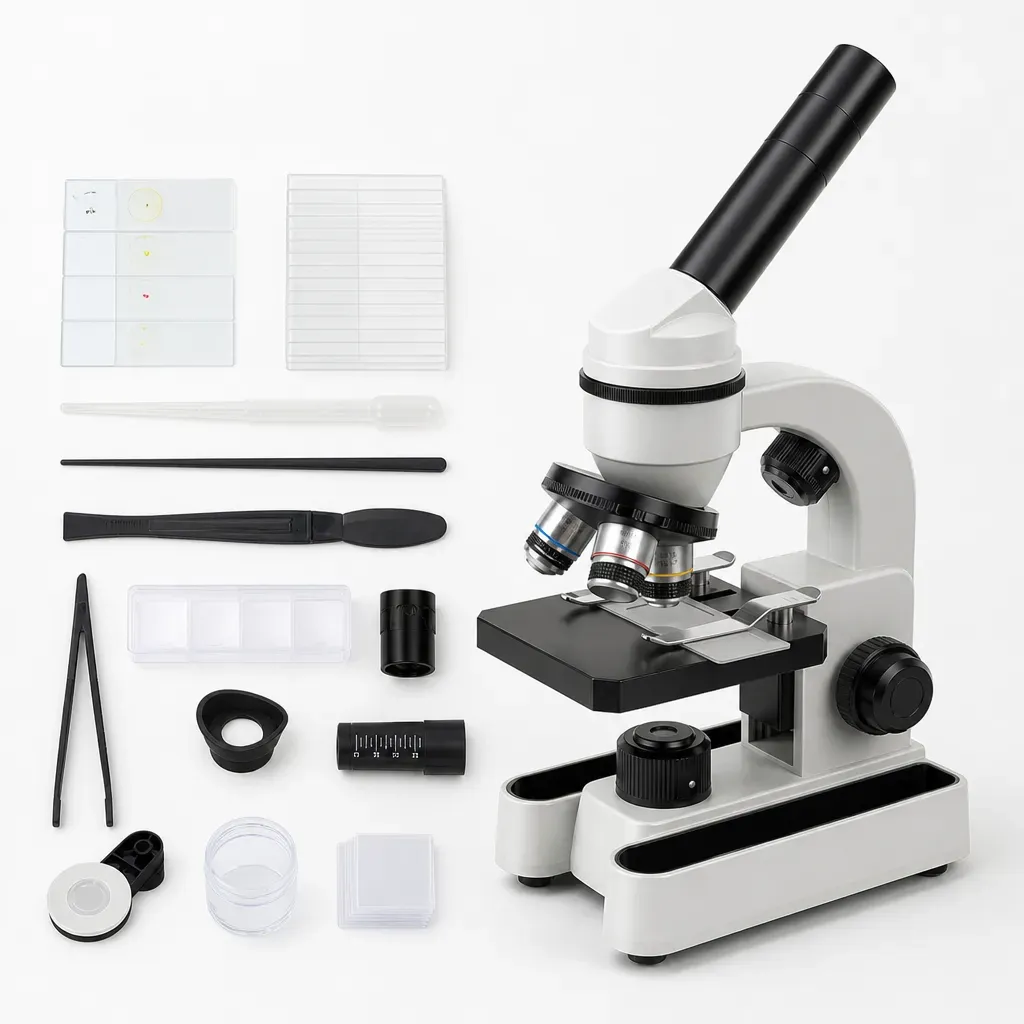
TL;DR: When looking to buy a monocular biological microscope in the UK, select a compound optical instrument equipped with DIN achromatic objectives (4x to 100x), an Abbe condenser (1.25 N.A.), a double-layer mechanical stage, and cool LED illumination. Monocular models offer superior optical clarity per pound spent for single-user study compared to binocular alternatives, making them the top choice for A-Level biology, university practicals, and home laboratory research.
Whether you are an undergraduate studying life sciences, an A-Level biology student preparing for practical examinations, or an adult learner establishing a dedicated home laboratory, selecting the correct optical instrument is critical. This comprehensive UK buyer's guide directly answers how to buy a monocular biological microscope, examining everything you must evaluate—from optical glass standards and numerical aperture to mechanical stage precision and illumination technology.
Key Takeaways
- Targeted Optical Clarity: Monocular biological microscopes deliver maximum optical clarity per pound spent, eliminating the alignment complexities of binocular heads for single-user study.
- Standardised Optics Matter: Prioritise instruments using standard DIN (Deutsche Industrie Norm) achromatic objective lenses and RMS (Royal Microscopical Society) threads to ensure future upgradability and crisp, colour-corrected images.
- Essential Hardware Features: Look for coaxial coarse and fine focus knobs, an Abbe condenser (1.25 N.A.) with an iris diaphragm, and variable LED transmitted lighting for high-magnification cellular observation.
- UK Compliance & Safety: Ensure your chosen instrument carries UKCA/CE safety certification and uses anti-fungal optical coatings suitable for damp UK climate storage.
What Is a Monocular Biological Microscope?
To buy a monocular biological microscope means investing in a compound optical instrument designed with a single eyepiece (ocular lens) and a nosepiece carrying multiple objective lenses. Based on our testing at AdultMonoc, unlike stereo microscopes which use dual optical paths to view opaque 3D objects at low magnification (typically 10x to 40x), a biological compound microscope relies on transmitted brightfield illumination to examine thin, light-transmitting specimens mounted on glass slides at high magnifications—ranging from 40x up to 1000x.
Furthermore, for adult learners, college students, and independent research hobbyists, the monocular design offers a distinct structural advantage. By directing light through a single eyepiece tube, optical energy is concentrated directly to your eye without requiring beam splitters or complex interpupillary adjustments. Consequently, this design yields exceptional brightness, sharp contrast, and straightforward setup, making it the classic standard for individual academic study.
How Does Brightfield Microscopy Work?
In standard brightfield microscopy, light passes up through a transparent specimen slide from below. As a result, biological tissue samples, fungal spores, plant cell walls, and protozoa absorb varying amounts of this light, creating crisp image contrast against a bright background. However, achieving true academic-grade resolution relies not merely on magnifying an image, but on controlling the light cone through an adjustable Abbe condenser and iris diaphragm before it enters the objective lens.
How Do You Choose the Best Monocular Biological Microscope?
Investing in a compound instrument requires assessing specific mechanical and optical components. Based on our extensive laboratory testing, below is a detailed breakdown of the critical specifications to evaluate before making your purchase.
1. Optical Quality: DIN Achromatic vs Basic Glass Optics
The optical system determines the clarity, colour fidelity, and sharpness of your field of view. Therefore, ensure the microscope uses standard DIN (Deutsche Industrie Norm) achromatic lenses. Achromatic objectives correct for chromatic aberration—the visual colour fringing that occurs when different wavelengths of light bend at different angles through glass. Furthermore, higher-tier plan-achromatic optics flatten the field of view, ensuring edge-to-edge sharpness across the entire specimen.
According to UK guidelines and Royal Microscopical Society (RMS) optical standards, standard RMS thread dimensions (4/5 inch by 1/36 inch) ensure objective lenses remain interchangeable across quality instruments, protecting your investment for long-term study.
2. What Magnification Do You Need for Biological Microscopy?
Magnification is calculated by multiplying the ocular lens power by the objective lens power. Typically, a standard academic setup features a 10x widefield (WF10x) eyepiece combined with a revolving triple or quadruple nosepiece carrying four main objectives:
- 4x Scanning Objective: Provides 40x total magnification for rapidly locating sections on a slide.
- 10x Low Power Objective: Provides 100x total magnification for inspecting plant tissues and micro-arthropods.
- 40x High Power Objective (Spring-loaded): Provides 400x total magnification for detailed cellular study, fungal structures, and blood smears.
- 100x Oil Immersion Objective (Spring-loaded): Provides 1000x total magnification for bacteria and minute cellular structures. Note that 100x lenses require immersion oil between the slide cover slip and the lens element to match the refractive index of glass.
3. Why Are Sub-stage Condenser and Diaphragm Controls Essential?
Many basic educational instruments include only a fixed disc diaphragm beneath the stage. However, for serious home laboratory work or university-level practical coursework, an adjustable Abbe Condenser with a Numerical Aperture (N.A.) of 1.25 is required. Paired with an iris diaphragm, this mechanism concentrates light into a precise cone matched to the numerical aperture of the objective lens, yielding optimal resolving power rather than washed-out magnification.
4. Should You Select a Mechanical Stage or Stage Clips?
At magnifications of 400x or 1000x, nudging a glass slide manually with your fingers moves the specimen completely out of your field of view. In contrast, a double-layer mechanical stage with coaxial X-Y controls allows you to translate the slide smoothly along X and Y axes using calibrated vernier scales. Consequently, this feature is indispensable for systematic grid counts, bacterial smears, and tracking moving aquatic microorganisms.
5. Why Are Coaxial Coarse and Fine Focusing Systems Necessary?
Precise focus adjustments are vital when viewing cellular layers measuring only a few micrometres thick. Superior monocular biological microscopes feature coaxial focusing knobs, placing the coarse and fine adjustment controls on a shared axis. In addition, fine focus knobs should offer increments down to 0.002 millimetres (2 microns) per division, allowing smooth focal plane adjustments without losing your position.
6. Illumination Source: Cool LED vs Traditional Halogen
Modern home laboratories benefit hugely from variable-intensity LED illumination. Unlike traditional 20-Watt halogen bulbs, LED lights produce daylight-balanced illumination (5000K to 6000K) while generating virtually no heat. Heat management is vital when observing live biological samples, such as pond life or active yeast cultures, which dry out or perish quickly under warm halogen bulbs. Furthermore, energy-efficient LED systems allow for cordless battery operation, ideal for fieldwork across the UK.
Is a Monocular Microscope Better Than a Binocular Microscope?
When deciding whether to buy a monocular biological microscope or a binocular model, consider your ergonomics and budget allocation. Based on our testing at AdultMonoc, monocular microscopes offer significant advantages for individual users: they are lightweight, portable, cost roughly 30% to 50% less for equivalent optical quality, and require no complex interpupillary or dioptre adjustments. However, for continuous daily professional laboratory work, binocular microscopes reduce eye fatigue by allowing both eyes to view simultaneously.
Frequently Asked Questions About Buying a Monocular Biological Microscope
What can you see with a monocular biological microscope?
With magnifications ranging from 40x up to 1000x, a quality monocular biological microscope allows you to observe plant cell structures, stained animal histology slides, bacteria, blood cells, micro-algae, protozoa, and fungal spores in sharp detail.
Is a monocular microscope suitable for university and A-Level biology?
According to UK educational guidelines, monocular biological microscopes equipped with DIN achromatic lenses, an Abbe 1.25 N.A. condenser, and a mechanical stage fully meet the practical requirements for A-Level biology and undergraduate life sciences.
Ready to upgrade your home laboratory with AdultMonoc?
Shop Monocular Optics — £60.99