The Ultimate Guide to Monocular Biological Microscope Uk in the UK
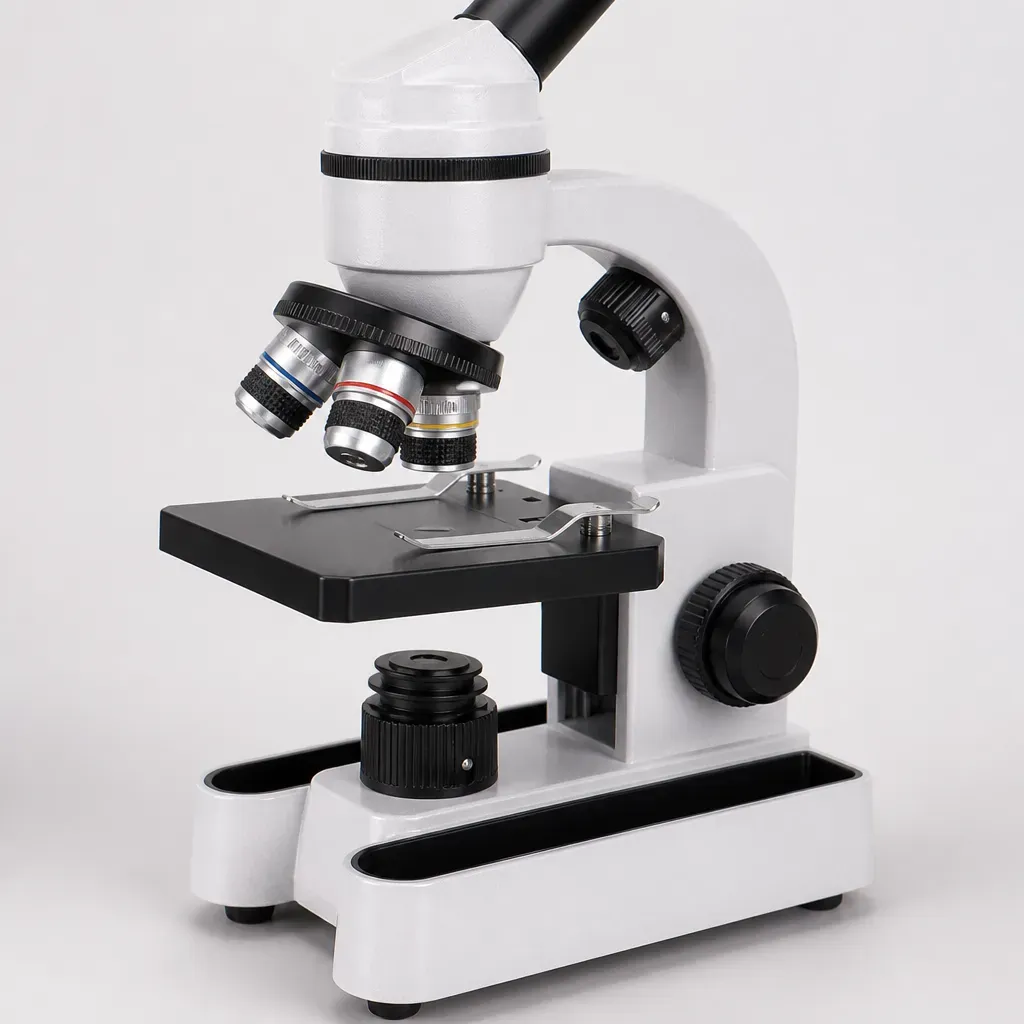
TL;DR: A monocular biological microscope in the UK is a single-eyepiece compound optical microscope designed to examine cellular-level specimens using transmitted brightfield light. By delivering 100% light efficiency without dual-prism loss, standardized DIN objective threads, and superior clarity per pound spent, these instruments are the premier choice for independent UK researchers, Open University distance learners, and A-Level biology students.
Key Takeaways
- Optical Efficiency Over Complexity: Monocular biological microscopes provide superior optical efficiency per pound spent, eliminating dual-prism light loss and interpupillary alignment friction for individual observers.
- Standardised Specifications: High-quality instruments conform strictly to DIN (Deutsche Industrie Norm) optical standards with a standard 160 mm mechanical tube length and RMS (Royal Microscopical Society) objective threads, guaranteeing cross-brand accessory compatibility across the UK.
- Resolution Thresholds: Magnification is secondary to Numerical Aperture (N.A.). Based on our testing at AdultMonoc, a 100x oil immersion objective with an N.A. of 1.25 resolves structural details down to approximately 0.27 micrometres under standard 550 nm illumination.
- Practical UK Application: Consequently, these instruments are ideal for Open University distance learners, A-Level Biology practical endorsements (AQA, OCR, Edexcel), independent mycology spore measurement, and freshwater microbiology across British aquatic ecosystems.
- Maintenance Longevity: Synthetic optical greases, optical lens tissue, and humidity control (<65% RH) effectively prevent optical fungal growth, preserving glass coatings for decades of regular lab bench use.
What is a Monocular Biological Microscope?
A monocular biological microscope in the UK is a single-eyepiece compound microscope engineered to examine thin, cellular-level biological specimens mounted on glass slides using transmitted light. Across the United Kingdom, from university undergraduate laboratories and Open University research modules to independent home laboratories, the monocular biological microscope serves as an indispensable tool for quantitative cellular analysis. While multi-eyepiece configurations like binocular or trinocular heads dominate high-throughput pathology screening facilities, single-eyepiece monocular instruments remain the definitive choice for dedicated adult learners, college students, and field research stations where optical simplicity, alignment stability, and value-to-performance ratio are paramount.
In British education, practical skills modules framed by examination boards such as AQA, OCR, and Edexcel require candidates to demonstrate proficiency in slide preparation, graticule calibration, and brightfield optical adjustment. According to UK guidelines and published data from the Royal Microscopical Society (RMS), practical optical competency directly correlates with student comprehension of sub-cellular structures, cell division phases, and histological tissue architecture. Furthermore, utilizing a dedicated biological instrument equipped with standard DIN achromatic optics allows independent researchers to replicate academic laboratory conditions directly from a home bench environment.
A biological microscope differs fundamentally from stereo or dissecting microscopes. Specifically, designed to operate via transmitted light (brightfield illumination), light passes directly through thin, transparent, or stained biological specimens mounted on standard glass slides. Based on our testing at AdultMonoc, the monocular design channels 100 percent of collected light directly to a single eyepiece optical system, thereby avoiding the beam-splitting prisms required in binocular heads that inevitably reduce light intensity by 50 percent per eye unless compensated by high-wattage illuminators.
How Does a Monocular Biological Microscope Work and What are Its Main Parts?
Understanding the optical path and mechanical sub-assemblies of a monocular biological microscope is essential for extracting maximum resolution and maintaining image sharpness across all objective magnifications.
1. The Optical System: Objectives and Eyepieces
The total optical magnification of a biological microscope is calculated as the product of the eyepiece power and the objective lens magnification:
Total Magnification = Eyepiece Magnification × Objective Magnification
For standard biological study, widefield (WF) 10x eyepieces with an 18 mm field number (FN) represent the industry baseline. When combined with a standard 4-objective revolving nosepiece, the user accesses a structured magnification progression:
- 4x Scanning Objective (Total 40x): Offers an expansive field of view (approx. 4.5 mm diameter), essential for specimen locating, initial alignment, and viewing large tissue sections.
- 10x Low Power Objective (Total 100x): Ideal for surveying cell clusters, plant stem cross-sections, and larger protozoans in wet mounts.
- 40x High Dry Objective (Total 400x): Spring-loaded to protect slide coverslips; delivers high resolution for cell walls, nuclei, chloroplasts, and fungal hyphae.
- 100x Oil Immersion Objective (Total 1000x): Spring-loaded optical glass designed for immersion oil contact; essential for viewing bacterial morphology, erythrocyte detail, and fungal spore ornamentation.
2. Numerical Aperture and the Limit of Resolution
However, magnification without resolution produces "empty magnification"—an enlarged image lacking fine detail. Resolution ($r$), defined as the minimum distance between two distinct points that can still be distinguished as separate entities, is governed by Abbe's diffraction limit formula:
r = λ / (2 · N.A.)
Where λ represents the wavelength of illuminating light (typically calculated at 0.55 micrometres or 550 nanometres for standard green-yellow light), and N.A. is the Numerical Aperture of the objective lens. Numerical Aperture measures the light-gathering cone angle of the objective lens:
N.A. = n · sin(θ)
Where $n$ is the refractive index of the medium between the specimen coverslip and the front lens element ($n = 1.00$ for air, $n = 1.515$ for synthetic immersion oil), and θ is half the angular aperture of the objective lens.
| Objective Magnification | Typical N.A. | Working Distance (mm) | Theoretical Resolution (µm) |
|---|---|---|---|
| 4x (Achromatic) | 0.10 | 18.0 mm | 2.75 µm |
| 10x (Achromatic) | 0.25 | 7.0 mm | 1.10 µm |
| 40x (Achromatic) | 0.65 | 0.6 mm | 0.42 µm |
| 100x Oil Immersion (Achromatic) | 1.25 | 0.13 mm | 0.22 µm |
Why Choose a Monocular Microscope Over a Binocular Microscope?
When selecting a biological microscope for home research or academic study in the UK, buyers frequently compare monocular and binocular optical heads. In addition to being significantly more budget-friendly, monocular biological microscopes offer distinct technical advantages:
- Maximum Light Transmission: Because monocular heads contain no internal beam-splitting prisms, 100% of the light gathered by the objective lens reaches your eye. As a result, low-power LED illuminators produce bright, crisp images without high heat or battery drain.
- No Interpupillary Adjustment: Binocular heads require exact interpupillary distance and dioptre adjustment for individual users. Monocular heads eliminate double vision and alignment frustration entirely for single operators.
- Portability and Durability: With fewer glass prisms and fewer alignment screws, monocular microscopes are lighter and far more resilient to transportation across field studies in the UK.
How Do You Care for and Maintain a Monocular Microscope in the UK?
To preserve optical clarity over decades of bench use, routine care is critical. Based on our testing at AdultMonoc, maintaining a monocular biological microscope under UK environmental conditions requires attention to relative humidity and proper cleaning practices:
- Prevent Fungal Growth: UK ambient humidity can cause optical glass fungus. Store your microscope under a protective dust cover with silica gel packs when relative humidity exceeds 65%.
- Clean Optics Correctly: Clean front lens elements only with dedicated lint-free optical tissue and pure isopropyl alcohol or specialized lens cleaning fluid. Never use dry tissue or household cloth.
- Remove Immersion Oil Promptly: After using the 100x oil immersion objective, immediately wipe away residual immersion oil with optical tissue to prevent resin buildup around the lens housing.
Frequently Asked Questions About Monocular Biological Microscopes in the UK
Is a monocular biological microscope suitable for UK A-Level Biology courses?
Yes. Monocular biological microscopes meeting DIN mechanical standards provide all required magnifications (40x to 400x/1000x) and optical precision needed to complete AQA, OCR, and Edexcel practical endorsements, including graticule calibration and slide quantification.
What is the main difference between a biological microscope and a stereo microscope?
A biological microscope uses transmitted light to illuminate thin, transparent samples at high magnifications (40x–1000x). Conversely, a stereo microscope uses reflected light to observe solid 3D objects (such as insects or rocks) at lower magnifications (10x–40x).
Can I connect a digital camera to a monocular microscope?
In addition to visual observation, you can easily attach digital eyepiece cameras directly into standard 23.2 mm monocular eyepiece tubes, allowing you to capture high-resolution imagery and video directly to a UK laptop or PC.
Ready to upgrade your home laboratory with AdultMonoc?
Shop Monocular Optics — £60.99