Monocular vs binocular microscope GCSE biology UK: when a single eyepiece is enough
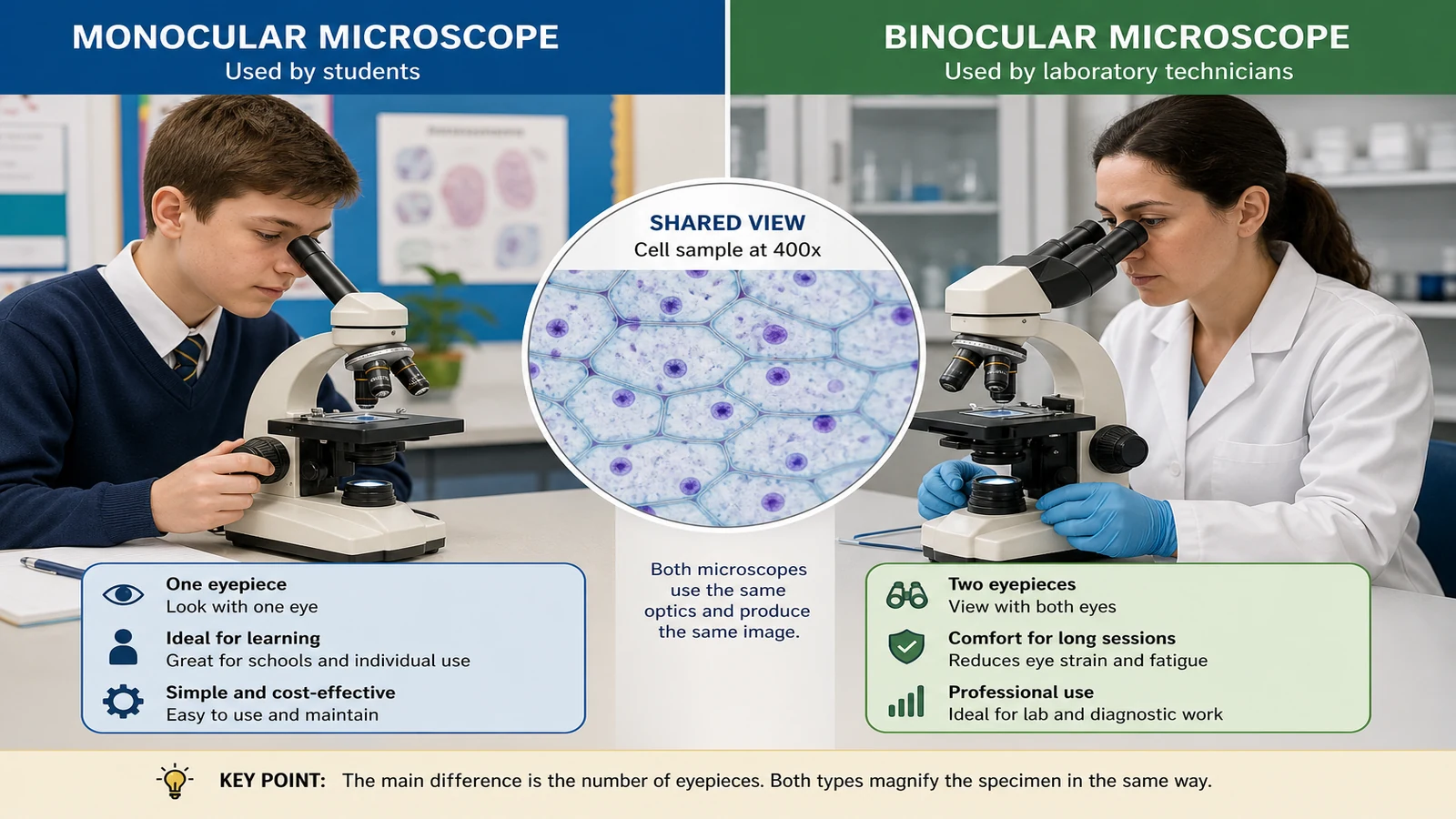
Monocular vs binocular microscope gcse biology uk is a budget question disguised as an optics question. AQA GCSE Biology required practical 1 only specifies a light microscope to observe and draw plant and animal cells with a magnification scale—it does not mandate two eyepieces. At the same objective magnification, monocular and binocular heads show the same image; binocular viewing mainly adds comfort for longer sessions by letting both eyes relax.
How long GCSE sessions actually last
Typical school practical slots run five to fifteen minutes of active focusing per specimen once slides are prepared. Home revision mirrors that: locate onion cells, switch to 400×, sketch, calculate magnification, done. For that pattern, monocular eyepieces are widely used in UK schools without students failing practical competencies. Binocular heads earn their price when you count spores, track motile organisms, or work through an evening microscopy club with dozens of slides.
Comparison for UK families
| Factor | Monocular compound | Binocular compound |
|---|---|---|
| GCSE RP01/onion/cheek suitability | Yes, when objectives include 4×, 10×, 40× | Yes, same optical path at matched objectives |
| Comfort beyond ~20 minutes | More eye fatigue for some users | Easier for asymmetric vision or extended counting |
| Budget impact | Lower head cost frees spend elsewhere | Premium head; verify stage and condenser still adequate |
| A Level extension | Usable if stage and optics solid | Preferred for longer post-16 sessions |
Spend savings on mechanics, not megapixel marketing
Better Equipped and CLEAPSS buying guides emphasise mechanical stages, 4×/10×/40× achromatic objectives, fine focus, and substage lighting before chasing extreme magnification badges. Redirect money saved on a monocular head toward a stable stage and condenser you can adjust at 400×—see our mechanical stage and Abbe condenser checklist. Ignore headline 16000× numbers until you read empty magnification explained.
Who should choose binocular
- Students continuing to A Level with weekly long practicals
- Beekeepers counting nosema fields across many slides—see nosema at 400×
- Users with strong prescription asymmetry who struggle with one eyepiece
Who should stay with monocular
- GCSE catch-up only for onion and cheek practicals
- Tight budgets where the alternative is no microscope at all
- Short revision bursts under twenty minutes
Balanced view on this shop’s listing
AdultMonoc sells a monocular biological compound microscope at £60.99. That aligns with GCSE short sessions but does not automatically mean every comfort feature is present—verify stage type and condenser on the product page rather than assuming laboratory-grade hardware from the headline magnification range.
Will examiners penalise monocular use?
No. Specifications require light microscope skills, not a particular head style.
Can I add a binocular head later?
Usually not on student models—choose head type at purchase unless the manufacturer documents an upgrade path.
Is monocular harder for left-eyed users?
Some students prefer binocular for comfort, but monocular remains valid for GCSE-length tasks.